

Welcome!
This website is designed to offer insight into the complexity of our human personalities and the factors that cause us to be unique. The question, ‘Who am I?’ can be difficult to answer. This is because we’re all made up of diverse internal parts who exist within us and have different identities, roles, opinions, emotional responses, and behaviours. On occasions, there can be rapid and unexpected switches between them. So, we can, for example, shift from being compassionate to critical in the blink of an eye according to our situation.
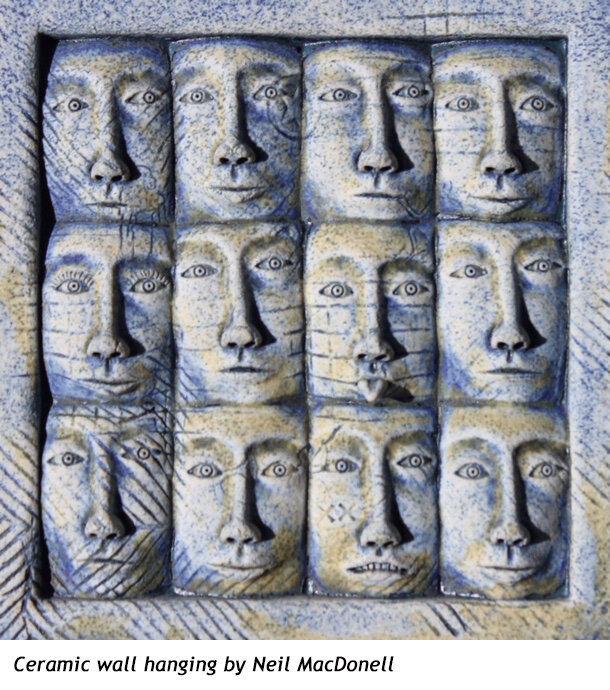
As a retired psychotherapist with 35 years of clinical experience, I believe one of the most important challenges for us, as therapists, is getting to know, understand and accept our own internal parts that collectively make us who we are authentically.
Understanding our multiplicity is crucial if we are to guide clients towards greater self-knowledge and healing. This chimes with the wise adage, ‘Therapists can only take their clients as far as they have gone themselves’.
Even though counsellors and therapists may not be conscious of it, they will always be dealing with different aspects of their clients; those parts that are anxious, depressed, sad or confused, to mention but a few. So, I would encourage therapists to sign up for specialist training that will enable them to work with the significant internal parts of their clients, especially those who are creating dis-ease and needing attention.
For example, an ex-client of mine, who presented with eating problems, was addicted to sweet comforting foods, like cake. She was convinced she was both greedy and lacked willpower. In truth, she had been so badly neglected by her mother during childhood that this distressed young part of her was still locked inside craving comfort. With guidance, my client was able to engage caringly with her own internal needy child and came to understand and soothe this very distressed young part of her.
(More information about Parts Work training for therapists can be found in the Resources Page).
Internal Conflict
A clash of opinions and ideas between our internal parts is a frequent cause of emotional distress. As mentioned above, my client who was addicted to sweet food experienced uncomfortable battles between her internal Comforter, who wanted to sooth the traumatised young one with cake, and her inner Critic, who judged her harshly for being weak-willed. In addition, an internal part called Shame added feelings of guilt to the distressing emotional mix.
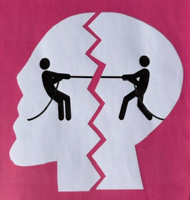
Internal conflict is a common reason why people feel unsettled and seek therapeutic help and it is this issue that spurred me on to write Tugs-of-War Within Us. At the heart of the book is a unique collection of intimate and candid stories narrated by nine experienced therapists. These clinicians have chosen to reveal very personal accounts of their internal conflicts because they want to demonstrate that by working alongside conflicted parts, it’s possible to reduce the levels of distress. So, Tugs-of-War Within Us could be seen as a must-read for counsellors and psychotherapists who feel out of their depth when clients present with trauma-based depression, fears, phobias or addictions.
Childhood trauma - caused by factors such as abuse, neglect, household dysfunction and external events - has a major impact on the development of our personalities. This continues to influence our relationships throughout life as well as our mental and physical health throughout adulthood. In extreme cases of early trauma and abuse, children may develop dissociative identity disorder (DID). This is a creative survival mechanism that enables the terrified infant to block out unbearable thoughts, memories, experiences or feelings by means of dissociation.
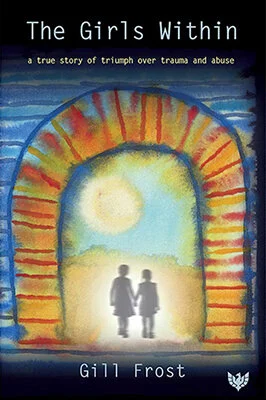
My first book, The Girls Within, is a true story about the therapy I undertook with an ex-client of mine who has DID. Initially, she had many years of therapy with me on her own, but later, I also worked face to face with two of her very traumatised, dissociated internal little girls, aged six and eight years old. Thanks to their willingness to ‘come out of hiding’ and meet me in my therapy room they were able to tell their terrifying stories and accept therapeutic help. In this way, they experienced healing and ultimately demonstrated how good can triumph over evil. Indeed, the book offers inspiration and hope to those who live or work with the legacy of childhood abuse.
For any readers who are survivors of abuse, please take care when reading through this website as some content may be triggering.